Mafia-Type Organizations and Their Extortion Strategies: A Case Study Analysis for Organized Crime Research
Extortion rackets represent one of the most structurally stable revenue mechanisms available to organized criminal groups. Unlike drug trafficking or fraud, which require supply chains and market access, extortion operates on a simpler logic: the credible threat of harm, applied repeatedly to a captive victim population. Understanding that logic — its architecture, its equilibria, its failure modes — is the central task of this case study analysis.
The analysis draws on documented typologies of mafia-type organizations (MTOs) and applies the conceptual lens of the GLODERS (Global Dynamics of Extortion Racket Systems) research framework to identify variables and mechanisms relevant to comparative, cross-contextual modeling.
Defining the Extortion Racket as a System
An extortion racket system is a structured, recurring mechanism of coercive tribute extraction, distinguished from opportunistic extortion by its organizational continuity, territorial scope, and internal governance. Where opportunistic extortion is episodic and uncoordinated, a racket system operates as a quasi-institutional arrangement — with defined collection schedules, differentiated victim categories, and internal rules regulating enforcement behavior.
This distinction matters analytically. Racket systems generate predictable revenue streams precisely because they are systems — not isolated acts of coercion but sustained relationships between an extracting organization and a compliant (or partially compliant) victim population. The recurring payment known in Italian criminological literature as pizzo exemplifies this: it is not a one-time demand but a periodic tribute that signals ongoing protection and continued organizational presence.
For modeling purposes, the racket system can be characterized by at least four core variables: the territorial or sectoral scope of extraction, the organizational capacity to enforce compliance, the victim population's behavioral response distribution, and the state's countervailing enforcement capacity. Each of these variables interacts dynamically — a point the GLODERS framework makes central to its analytical architecture.
Organizational Architecture of Mafia-Type Extortion
MTOs sustain extortion operations through differentiated role structures that separate strategic decision-making from street-level enforcement. This division of labor is not incidental — it serves both operational efficiency and legal insulation for upper-tier actors.
At the operational base, low-ranking members or associates handle direct contact with victims: delivering demands, collecting payments, and signaling enforcement capacity through visible presence. Mid-tier coordinators manage geographic zones or business sectors, resolve disputes between collectors, and relay upward to leadership. Senior figures set tribute rates, adjudicate exceptional cases, and manage relationships with political or institutional actors that provide protection from law enforcement.
Racket governance — the internal rules and dispute-resolution mechanisms that regulate extortion operations — is what distinguishes a stable MTO from a fragmented criminal network. Documented examples from Sicilian Cosa Nostra, the Neapolitan Camorra, and East Asian triads all show variants of internal sanctioning systems: collectors who overcharge victims, or who pocket tribute rather than remitting it upward, face organizational punishment. This internal discipline is what makes the protection promise credible and the racket economically sustainable.
One underappreciated feature of this architecture is its information function. The collection hierarchy doubles as an intelligence network. Collectors observe victim businesses, track economic conditions, and report back — providing leadership with data that informs tribute calibration and identifies targets for expansion or consolidation.
Territorial Control as the Foundation of Extortion Power
Territorial control is the enabling condition for systematic extortion: without credible dominance over a defined geographic or sectoral space, an MTO cannot make its protection promise believable or its threats credible. Control transforms a coercive actor into something functionally resembling a monopoly supplier of security — however coercive that supply may be.
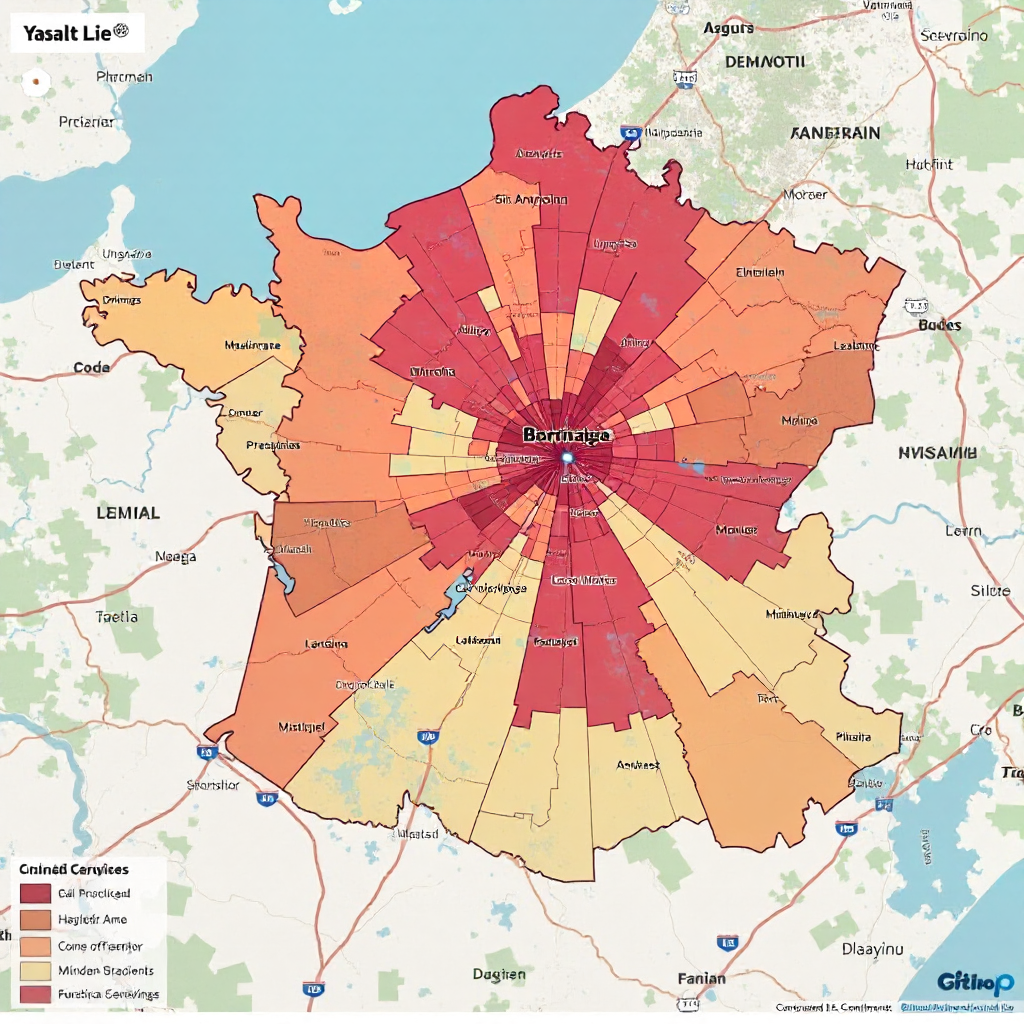
The protection market — the economic space in which extortion operates as a quasi-service — only functions when buyers (victims) believe that paying will actually result in protection from other threats, including threats from the extracting organization itself. This requires territorial exclusivity. When multiple criminal actors contest the same territory, the protection promise breaks down: victims face competing demands, the credibility of any single organization's guarantee erodes, and violence tends to increase as groups compete for dominance.
Contested territorial control is therefore a key destabilizing variable in extortion racket modeling. Research on Camorra clan fragmentation in Naples, for instance, suggests that periods of inter-clan conflict correlate with higher victim-reported extortion frequency and greater unpredictability in demand levels — consistent with a model in which territorial fragmentation degrades racket governance and drives competitive extraction behavior.
Sectoral control — dominance over an economic sector rather than a geographic area — operates by analogous logic. An MTO that controls access to a specific labor market, construction supply chain, or wholesale distribution network can extract tribute from firms dependent on that access, without necessarily holding physical territory.
Extortion Strategies in Practice — Patterns Across Contexts
Across documented MTO typologies, several recurring strategic patterns emerge that are analytically separable from the specific cultural or historical contexts in which they appear.
Graduated demand structures are common: initial demands are set below the victim's expected resistance threshold, with escalation triggered by non-compliance or by observed increases in the victim's business revenue. This mirrors price discrimination logic — extracting closer to the victim's maximum willingness to pay while minimizing the probability of triggering resistance or reporting.
Violence calibration is another consistent pattern. Effective extortion rackets use violence sparingly and strategically, not indiscriminately. Excessive violence attracts law enforcement attention, damages the victim's ability to pay, and signals organizational instability. Documented MTO practice tends toward targeted, exemplary violence — applied visibly to non-compliant victims to deter others — rather than routine brutality. The threat's credibility depends on occasional demonstration, not constant application.
A third pattern involves selective enforcement differentiation: distinguishing between victim categories by economic capacity, social visibility, and political connectivity. Victims with high political exposure or media access are typically treated differently from anonymous small businesses — demands may be lower, enforcement softer, or collection intermediated through social ties rather than direct threat.
Victim Behavior and Compliance Dynamics
Victim compliance in extortion racket systems is shaped by a combination of structural position, social environment, and individual cost-benefit assessment — not simply by fear. Understanding this behavioral distribution is critical for both modeling and for designing effective intervention strategies.
The primary structural factors include the victim's economic dependence on the territory controlled by the MTO, the availability and perceived reliability of state law enforcement, and the social norms governing reporting behavior within the victim community. Where reporting is socially stigmatized or perceived as futile — because law enforcement is corrupt, slow, or ineffective — compliance rates rise independent of the actual enforcement threat posed by the MTO.
Victim resistance, when it occurs, tends to cluster in specific conditions: when victim networks organize collectively, when credible state protection becomes available, or when the MTO's enforcement capacity is visibly weakened by internal conflict or law enforcement pressure. The anti-pizzo movement documented in Sicily — where business associations provided collective cover for refusal — illustrates how changing the social norm around compliance can shift the victim behavior distribution significantly, even without changes in the underlying enforcement equilibrium.
For organized crime modeling, the victim population is best represented not as a homogeneous compliance mass but as a distribution of behavioral types with varying thresholds for resistance, reporting, and payment — thresholds that shift in response to observable signals about organizational strength and state capacity.
Modeling Extortion Racket Systems — Analytical Implications
The case study findings translate into a set of modeling-relevant variables and mechanisms that the GLODERS framework can operationalize across different empirical contexts.
Key state variables for any formal model of an extortion racket system include: territorial coverage (the proportion of potential victims within the MTO's effective control zone), tribute rate (the payment demanded as a proportion of victim revenue or assets), enforcement intensity (the MTO's demonstrated capacity to punish non-compliance), and the enforcement equilibrium — the dynamic balance between MTO enforcement capacity and state law enforcement response.
The enforcement equilibrium deserves particular attention because it is not static. MTOs adapt their operational profile — visibility, violence levels, collection methods — in response to law enforcement pressure. This adaptive behavior means that suppression strategies targeting surface indicators (arrest rates, seizures) may displace rather than eliminate racket activity, shifting it to less visible sectors or geographic areas.
Agent-based models and game-theoretic frameworks have both been applied to extortion racket dynamics, with complementary strengths. Game-theoretic approaches clarify the strategic logic of tribute-setting and compliance decisions under different information conditions. Agent-based models better capture the emergent properties of large victim populations with heterogeneous compliance thresholds and the spatial dynamics of territorial control. The GLODERS framework's comparative ambition — applying consistent analytical categories across different national and cultural contexts — requires model structures robust enough to accommodate both types of variation.
Disruption, Adaptation, and Racket Resilience
Extortion rackets are resilient organizational forms, and that resilience has specific structural sources that suppression strategies must account for. The same features that make rackets stable — internal governance, territorial monopoly, victim compliance norms — also make them resistant to disruption by conventional law enforcement approaches.
When law enforcement arrests senior MTO figures, racket operations typically continue under successor leadership, often with a temporary increase in violence as internal succession contests play out. The organizational architecture described earlier — with its separation of strategic and operational roles — means that removing any single node rarely collapses the system. This is a well-documented pattern across Cosa Nostra prosecutorial campaigns, Yakuza suppression efforts in Japan, and anti-Camorra operations in Campania.
Economic shocks present a different disruption mechanism. When victim businesses fail or contract significantly, tribute revenue declines and the MTO faces a resource constraint that can force territorial retrenchment or internal conflict over reduced spoils. The 2008-2012 economic contraction produced documented effects on extortion racket activity in several European contexts, though the direction of effects varied: some MTOs reduced demands to preserve victim viability; others intensified extraction to compensate for revenue losses, accelerating victim business failure.
For suppression strategy design, the analytical implication is that interventions targeting the enforcement equilibrium — shifting victims' perceived cost-benefit calculus around reporting, or credibly degrading the MTO's enforcement capacity — are likely more durable than leadership decapitation strategies alone. Combining prosecutorial pressure with victim protection mechanisms and collective resistance support addresses multiple variables simultaneously, rather than targeting a single node in a redundant system.
Frequently Asked Questions
What distinguishes a mafia-type extortion racket from other forms of organized criminal extortion?
The defining features are organizational continuity, internal governance, and territorial or sectoral monopoly. A mafia-type extortion racket operates as a sustained system with defined roles, collection schedules, and internal rules — not as episodic coercion by loosely affiliated actors. The protection promise is credible precisely because the organization has the capacity and incentive to enforce it consistently over time.
How do researchers operationalize "protection markets" in quantitative models of extortion?
Protection markets are typically operationalized through variables capturing the MTO's market share (proportion of potential victims paying tribute), the tribute rate as a fraction of victim revenue, and the competitive structure of the local criminal environment. Demand-side variables include victim willingness to pay for protection against third-party threats and the perceived reliability of state law enforcement as an alternative. Empirical operationalization remains challenging due to data availability constraints.
What role does violence play in sustaining or undermining extortion racket systems?
Violence serves primarily as a signaling mechanism — its occasional, targeted use maintains compliance without the costs of constant application. Excessive or indiscriminate violence undermines racket stability by attracting law enforcement attention, damaging victims' payment capacity, and signaling organizational weakness or internal disorder. Well-governed MTOs treat violence as a costly last resort, not a routine tool.
How does territorial fragmentation affect the stability of extortion rackets?
Territorial fragmentation typically destabilizes racket systems by introducing competitive extraction dynamics. When multiple criminal actors contest the same territory, protection promises lose credibility, victim demands become unpredictable, and violence increases as groups compete for dominance. Fragmentation is associated with higher victim-reported extortion frequency and lower average compliance rates — patterns consistent with a breakdown of the monopoly conditions that make stable racket governance possible.
What are the main methodological challenges in studying extortion rackets empirically?
The core challenge is data scarcity: victims underreport, MTOs operate covertly, and official crime statistics systematically undercount extortion incidence. Researchers rely on court records, victim surveys (often conducted post-prosecution), law enforcement intelligence, and journalistic documentation — each with distinct selection biases. Cross-national comparison is further complicated by definitional inconsistencies in how extortion is classified and recorded across legal systems. The GLODERS framework addresses this partly by developing consistent conceptual categories applicable across contexts, but empirical validation remains an ongoing constraint.